Kambo
Facilitation
Medicine Wheel • Austin, Texas
Options & Pricing
Complimentary Consultation - FREE
We require a free consultation before committing to Kambo treatment. During this consultation we will discuss your intentions and answer any questions you may have about the process.
Private Kambo Ceremony - $400
Ceremonies are facilitated by Jessica Arroyo and take place on a beautiful Hill Country property on the outskirts of Austin, Texas. Each ceremony includes:
Kambo (responsibly sourced from the Amazon Rainforest.)
Sananga
Hapé
Icaros (Traditional Shamanic Medicine Songs)
Sound Bowl Healing
Guided Meditation
Traditional Ofrenda
Herbal Teas
Thorough Screening & Pre-Ceremony Preparation
Post-Ceremony Aftercare & Guidance
Ceremonies are held in the morning from 9am-12pm unless otherwise agreed.
Full Inoculation (3 Ceremonies) - $1200
(3) Private Kambo Ceremonies within a 28 day period. Preferably three consecutive days.
This is our recommended process when working with Kambo for the first time.
Learn more about each aspect of the ceremony below.
What Is Kambo?
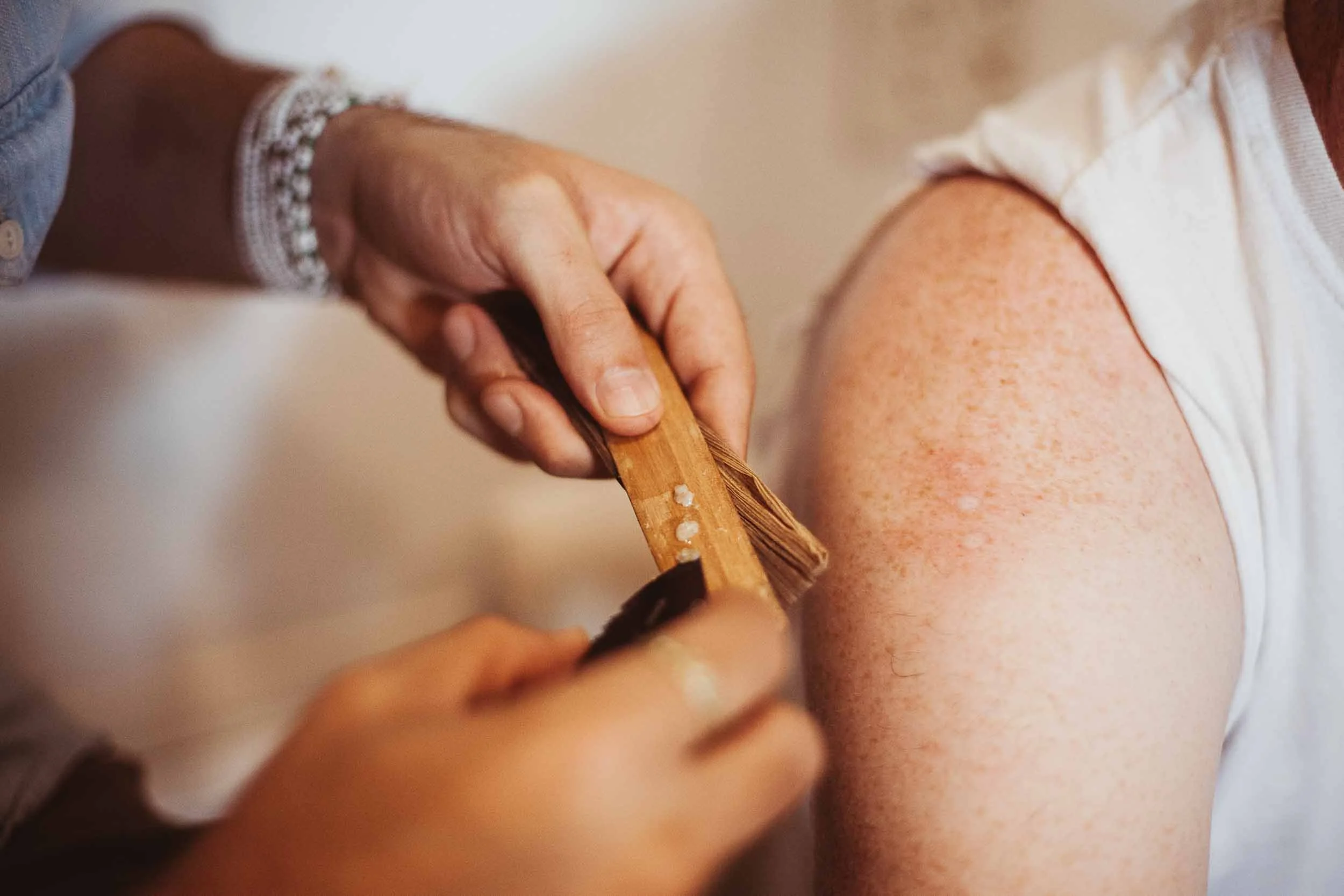
Kambo is a powerful sacred medicine that has been used for centuries by Indigenous Amazonian tribes, such as the Matsés, Katukina, and others in Brazil and Peru.
This ancient medicine is traditionally used as a cleansing ritual to remove “panema”–bad luck, heavy energy, lethargy. A properly facilitated Kambo ceremony is believed to sharpen senses, clear illness, and strengthen the spirit.
Kambo is not a psychedelic like ayahuasca. It does not produce visions or altered states in the classic sense. Instead, it creates a powerful physical purge. It is considered more of a physical and energetic cleanser than a visionary spiritual teacher.
What Are The Benefits of Kambo?
Kambo has traditionally been used as a pre-hunting ritual. It is believed to increase the hunter’s speed and endurance and to help eliminate human odor, allowing hunters to move more effectively through the forest.
In traditional Amazonian practices, Kambo is also believed to have a wide range of medicinal benefits. It is used by Indigenous communities for conditions such as malaria, snake bites, fevers, infections, fertility challenges, and pain. It is also traditionally used as a cleansing ritual intended to detoxify and strengthen the body and mind, increase energy and stamina, and support overall well-being.
What to expect during a kambo ceremony
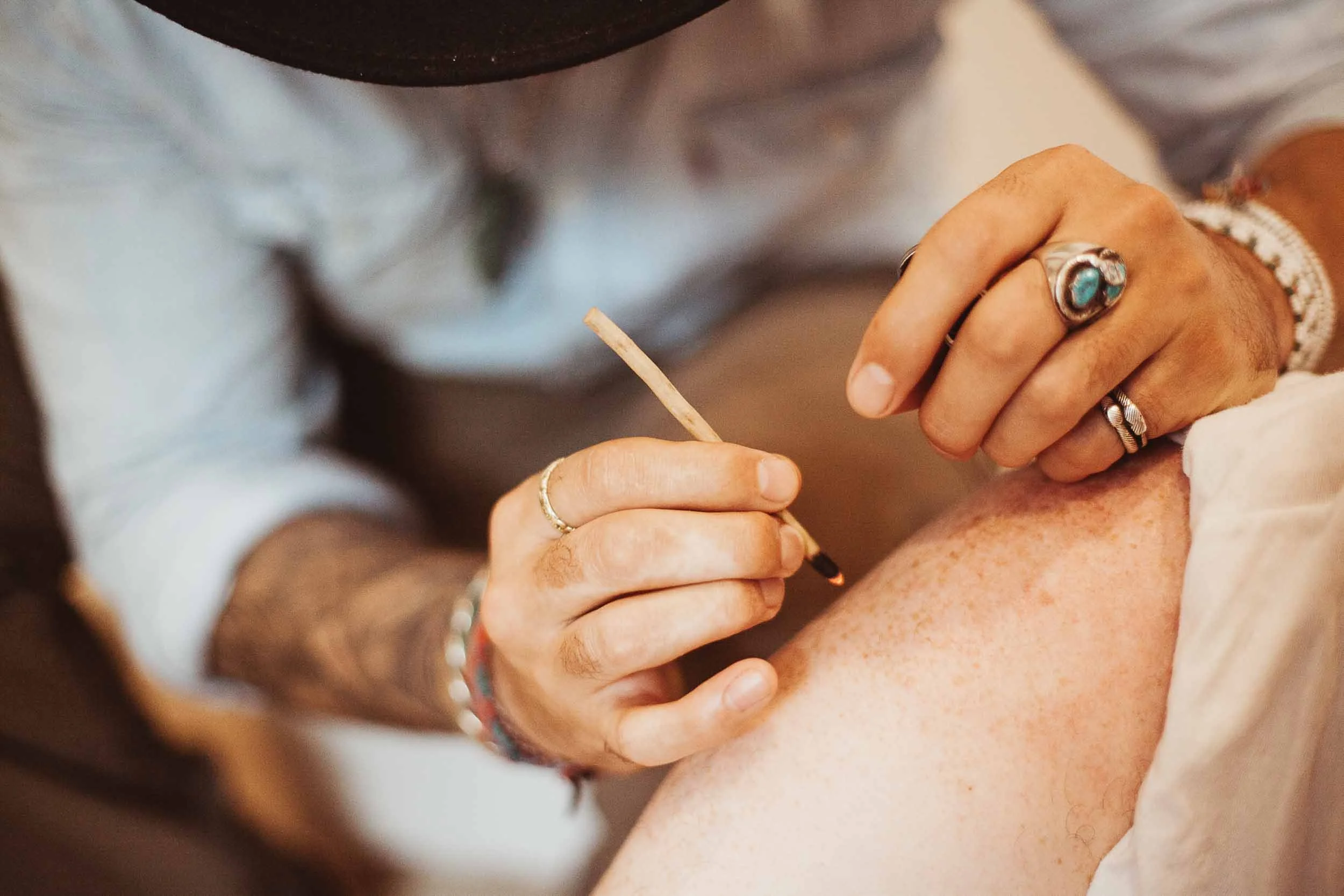
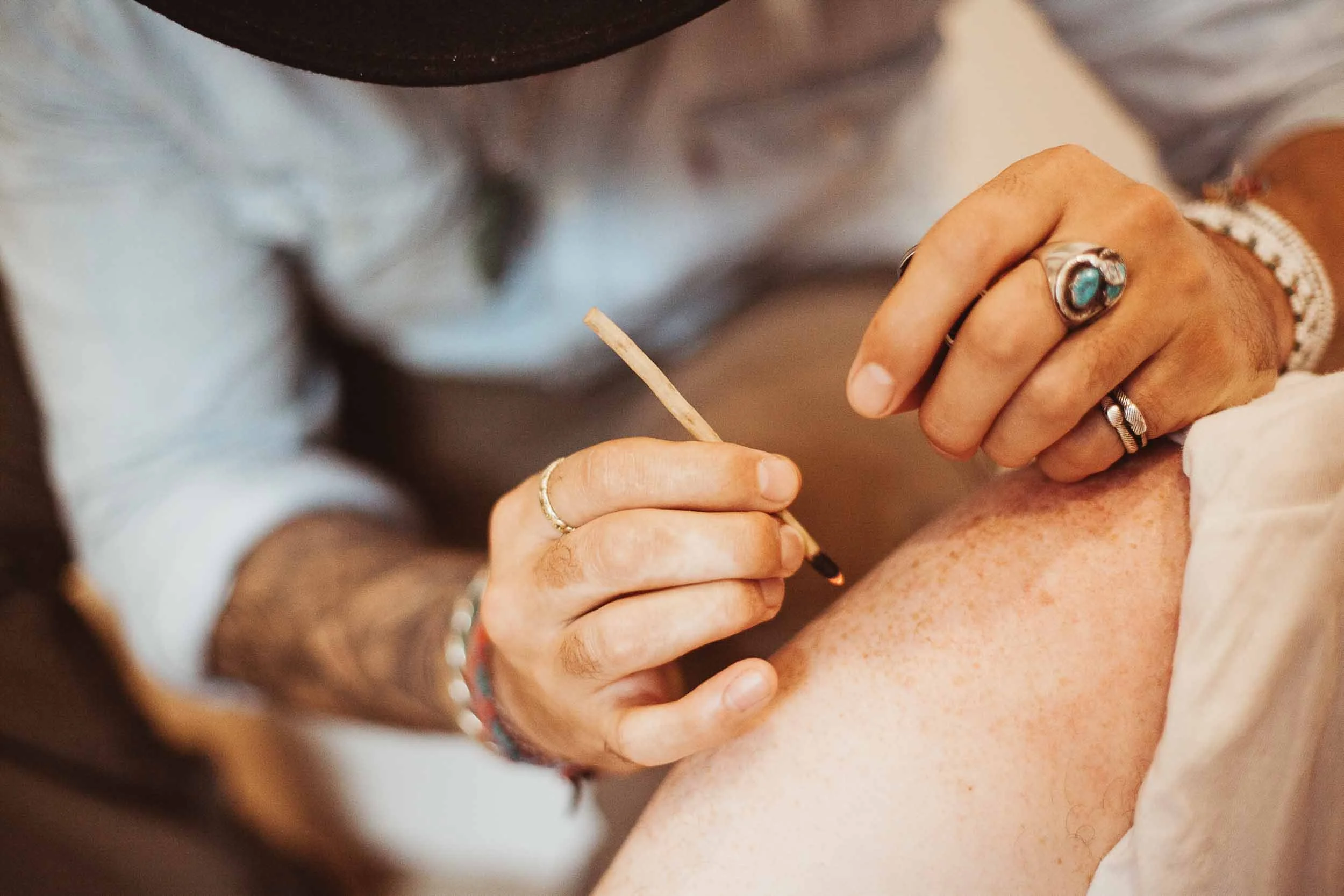
Small superficial burn points are created on the skin using a heated vine or stick. This process, often called “opening the gates,” removes the very top layer of skin so the medicine can be absorbed. The number of points varies depending on the individual and their experience level, though a first session typically involves two to four points. We take it slow and start with a low dose to see how the participant responds.
When Kambo is applied to the small burn points on the skin, many people experience an immediate sensation often described as warmth, burning, or tingling. This feeling may subside after a few moments, though the effects of Kambo may take several minutes to fully arise.
One of the most common initial sensations is heat. The body may begin to warm, and the skin may become flushed. Some people notice an increase in heart rate, ringing in the ears, or a heightened awareness of their heartbeat.
As the process continues, some individuals may briefly feel lightheaded or faint. This phase is typically short-lived, often lasting less than a minute. Many participants describe this moment as a temporary shift or release within the experience.
Shortly afterward, nausea and purging commonly occur. Prior to the application of Kambo, participants typically drink a significant amount of water (often around 1.5–2 liters), which helps facilitate this cleansing process. The purge may begin primarily as water and can later include bile as the body continues to release.
The color and consistency of the purge can vary from person to person. After several minutes, the process usually subsides and the Kambo secretion is removed. The entire experience typically lasts around 15–30 minutes.
Once the Kambo is removed, many people report that their bodies begin to recalibrate quickly and the most intense effects diminish. Some participants may continue releasing through sweat, tears, or occasional purging afterward as the body completes the process.
What is Sananga?
Sananga is a traditional plant medicine prepared as eye drops from the roots and bark of plants in the Tabernaemontana family. It has long been used by Indigenous tribes of the Amazon as part of their ceremonial and healing traditions.
Sananga is applied to the eyes to help sharpen vision during hunting and traveling in the forest, particularly in low-light conditions. It is also valued within Indigenous healing systems for its cleansing and balancing properties.
When the drops are applied, they typically create an intense burning sensation in the eyes that lasts for several minutes before gradually subsiding. Many people report that the experience is followed by a feeling of clarity, calm, and heightened awareness.
In traditional contexts, Sananga has been used to support eye health and is sometimes associated with helping clear visual disturbances and impurities affecting the eyes. Some practitioners also view the medicine as working on an energetic level, helping to clear emotional blockages, release stored tension, and support the opening of one’s inner perception or intuition.
Many people experience Sananga as deeply grounding and centering. It is sometimes used alongside other Amazonian plant medicines and ceremonial practices to support mental clarity, emotional balance, and energetic alignment.
What is Hapé?
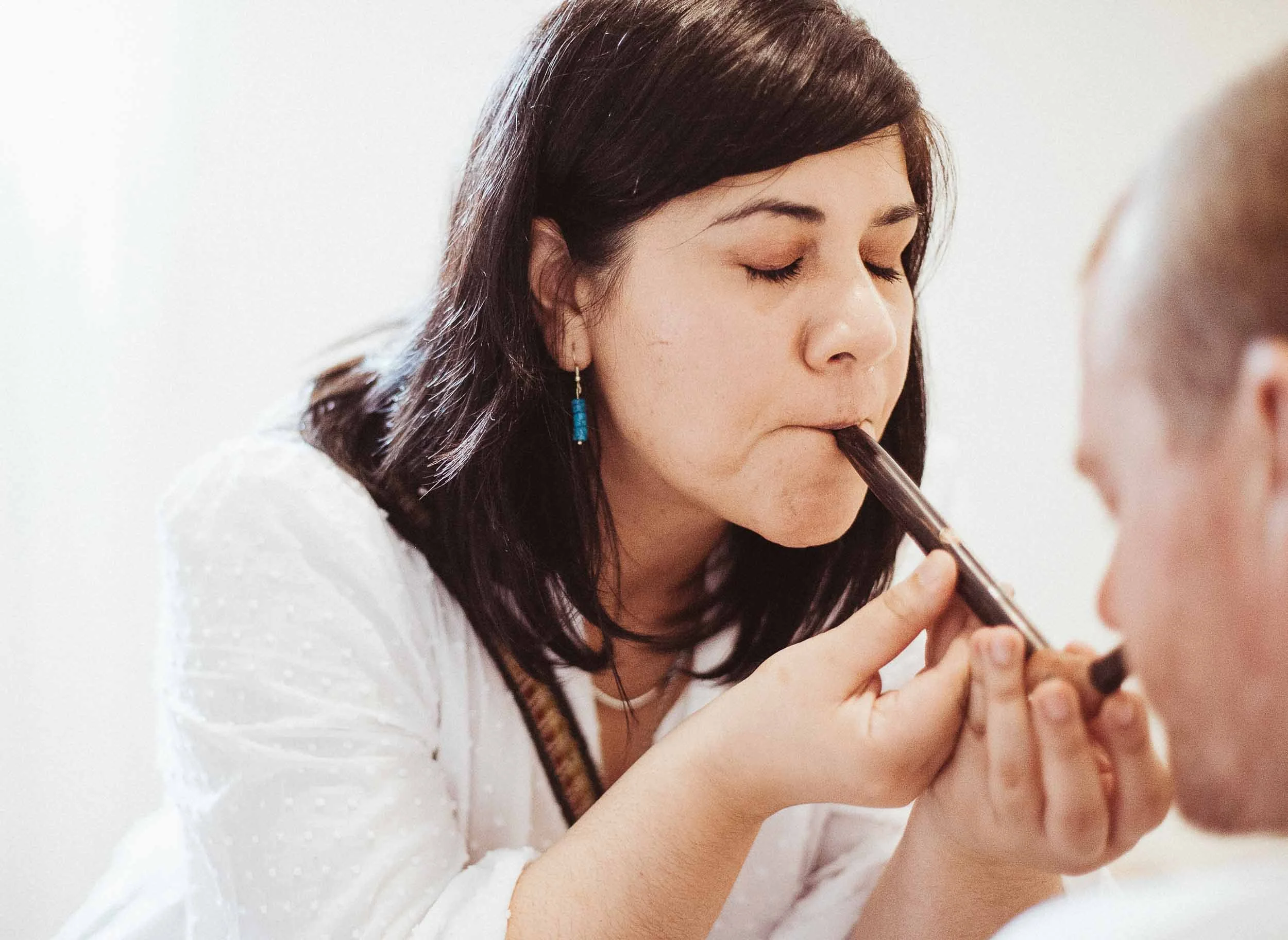
Hapé is a sacred tobacco snuff. For thousands of years, it has been an important part of Indigenous ceremonial practices, cultural traditions, and healing systems.
Unlike common tobacco products, Hapé is not sniffed, snorted, or inhaled. Instead, the finely powdered medicine is gently blown into the nostrils using a pipe called a kuripe (for self-application) or a tepi (when administered by another person).
Different Amazonian tribes prepare Hapé using traditional methods passed down through generations. Each tribe and lineage may have its own unique blend of tobacco and medicinal plants, often used in ceremony for grounding, clearing the mind, strengthening focus, and supporting spiritual connection.
Traditionally, Hapé is used to help quiet the mind and sharpen concentration, bringing clarity and presence to the moment. Many people experience it as a way to reconnect with the breath and realign their energetic centers, helping clear internal and external distractions before meditation, prayer, or intention-setting.
The medicine is also valued for its cleansing qualities. It may help clear the sinuses of mucus and impurities and is often used as a form of energetic and physical detoxification. Many people report a calming and grounding effect on the emotions that continues well beyond the initial sensation.
In both traditional and modern ceremonial contexts, Hapé is sometimes used alongside other healing practices to support mental clarity, emotional balance, and personal transformation.
“The phrase “life-changing” barely describes how monumental and exceptional this experience was for me. I have a renewed understanding of my true self and purpose. I am eternally grateful.”
“I feel like I can appreciate and accept who I am, what my past was, and have gratitude for the world we share with one another.”
“I am so very grateful to you and the team that facilitated such a beautiful process for us all. I felt welcomed, and more importantly, safe.”
“It’s as though I am completely reborn and seeing the world anew.”
“I came away from this experience feeling so looked after, supported, and guided throughout my healing journey.”
Schedule Your Free Consultation.
I would love to discuss your specific intentions and provide you with more details about our services. Please tap below to schedule your free consultation.